
Note: Some links may earn us a commission at no cost to you.
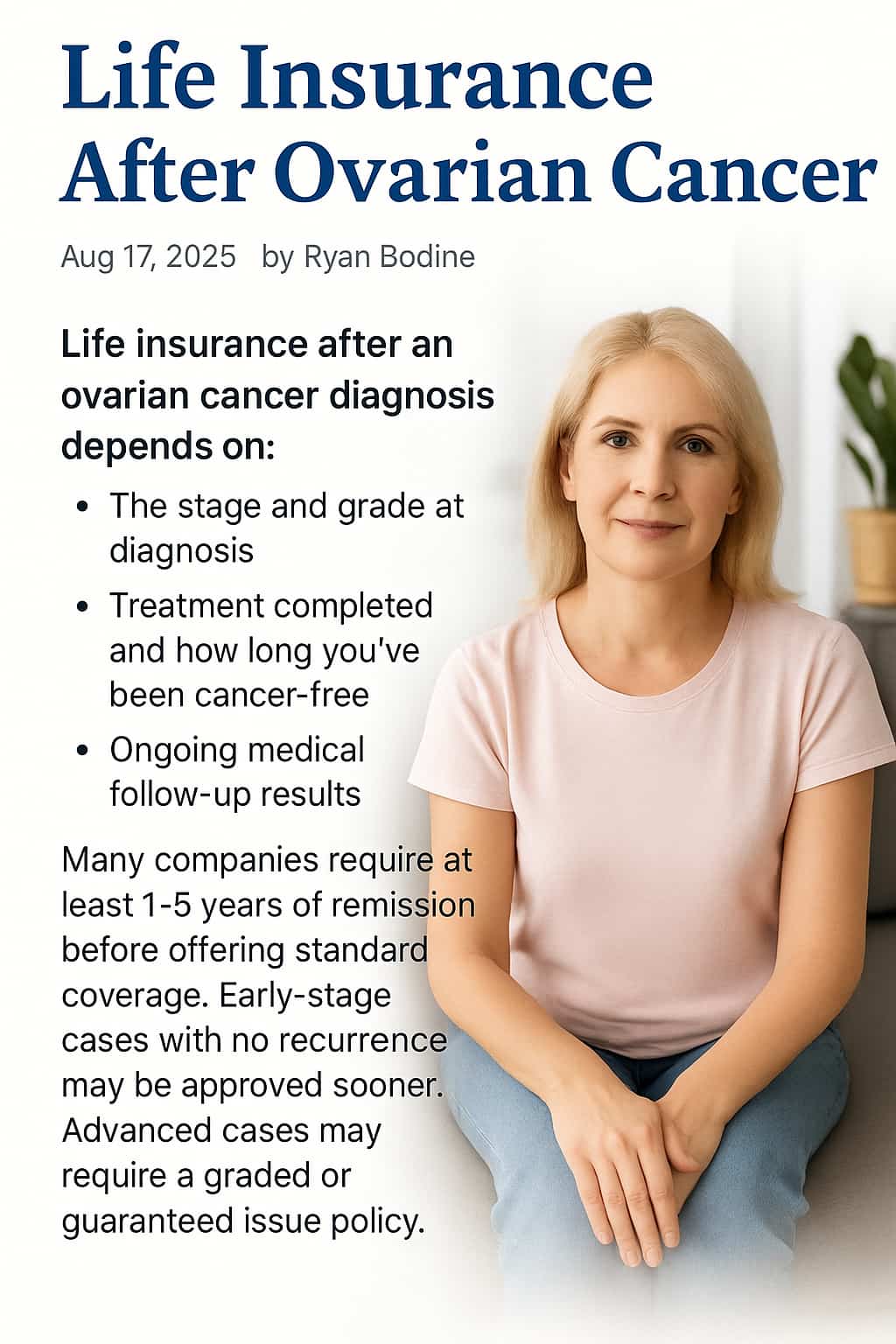
Many people qualify for coverage after ovarian cancer—especially with time in remission and good follow-up care. Insurers weigh your individual history, not just the diagnosis.
📌 Related reading: The Ultimate Guide to Life Insurance Approval, Life Insurance After Cancer: Overview
What Insurers Look At
- Stage & Grade at Diagnosis
Earlier stage (I–II) and lower grade are viewed more favorably than advanced stage (III–IV) or high-grade serous. - Histology & Risk Factors
Epithelial vs. non-epithelial types, BRCA status, genetic testing results, and family history can influence risk. - Treatment & Outcome
Surgery (TAH-BSO/debulking), chemotherapy, targeted therapy, radiation—plus pathology and margins. - Time Since Treatment
Most carriers want 1–5 years cancer-free; more time = better offers. - Current Surveillance
Regular oncology follow-ups, CA-125 trends, and imaging (stable/normal) are reassuring. - Overall Health
BMI, blood pressure, cholesterol, diabetes, smoking/nicotine use, etc.
👉 Related: High Cholesterol and Life Insurance
Typical Underwriting Outcomes (What to Expect)
These are general patterns—each company is different. The right fit matters.
- Stage I, low-grade, completed treatment, 2–3+ years in remission
Often Standard to mildly Table-rated; some carriers consider Standard Plus with excellent follow-up. - Stage II, good response, 3–5+ years in remission
Commonly Table ratings (mild–moderate). May include a temporary flat extra (an added $ per $1,000 of coverage) for a few years. - Stage III–IV or high-grade with good remission
Frequently postponed until a longer remission (e.g., 5+ years) and clean surveillance; then table or flat extra possible. - Recent treatment (<12 months) or active disease
Usually postponed. Consider guaranteed issue or graded benefit options temporarily.
📌 Learn more: How Underwriters Assess Cancer, What Flat Extras Mean (Cancer)
⏰ 30-Day Money Back Guarantee
Compare Quotes NowApply with confidence — cancel within 30 days for a full refund.
Ways to Improve Your Approval Odds
- Keep surveillance consistent (on-time oncology visits, documented normal/declining CA-125, stable imaging).
- Share clear documentation: operative reports, pathology, last oncology note, and lab trends.
- Show stability in weight, blood pressure, cholesterol; avoid nicotine.
- Apply to the right carrier: some are demonstrably more flexible with early-stage ovarian cancer than others.
- Time your application: a few additional clean checkups can move you from postponed → approved.
📌 Helpful: Cardiac/Lifestyle Factors: Why They Matter, The Ultimate Guide to Life Insurance Approval
If You Were Declined Before
Declines are not permanent. Two big unlocks:
- More time in remission (e.g., crossing the 2-year or 5-year mark).
- Cleaner surveillance (normal CA-125, stable imaging, NED in notes).
Reapply with the right carrier once these change.
Policy Types to Consider
- Traditional Term or Whole Life (best pricing if eligible)
Great once you’re past the carrier’s remission window. - Simplified Issue (no exam, health questions only)
Useful if you’re close to—but not quite past—the preferred waiting period. - Guaranteed Issue (no questions, graded benefit for first 2 years)
A bridge when traditional coverage isn’t available yet.
📌 See: Cancer Guide (All Cancers), Ultimate Guide
What to Prepare Before You Apply (Checklist)
- Last oncology visit note (impression/plan)
- Pathology and operative reports (if available)
- CA-125 trend (last 12–24 months)
- Imaging results (CT/PET/MRI summaries)
- List of current meds and dates treatment ended
- Basic vitals (height/weight, BP, lipids)
Bottom Line
An ovarian cancer history doesn’t end your chances of getting life insurance. The keys are time in remission, clean follow-up, and choosing the right insurer. Many applicants secure coverage—sometimes at standard rates—once enough time has passed and surveillance is stable.
💬 Tip: Even if you were declined, a fresh review after more remission time or improved labs can change the outcome.
💡 Life Insurance Made Easy
Get My Instant QuoteSee your best options in just minutes — no medical exams required.
Leave a Reply